

Handleless or shaker: what the door changes
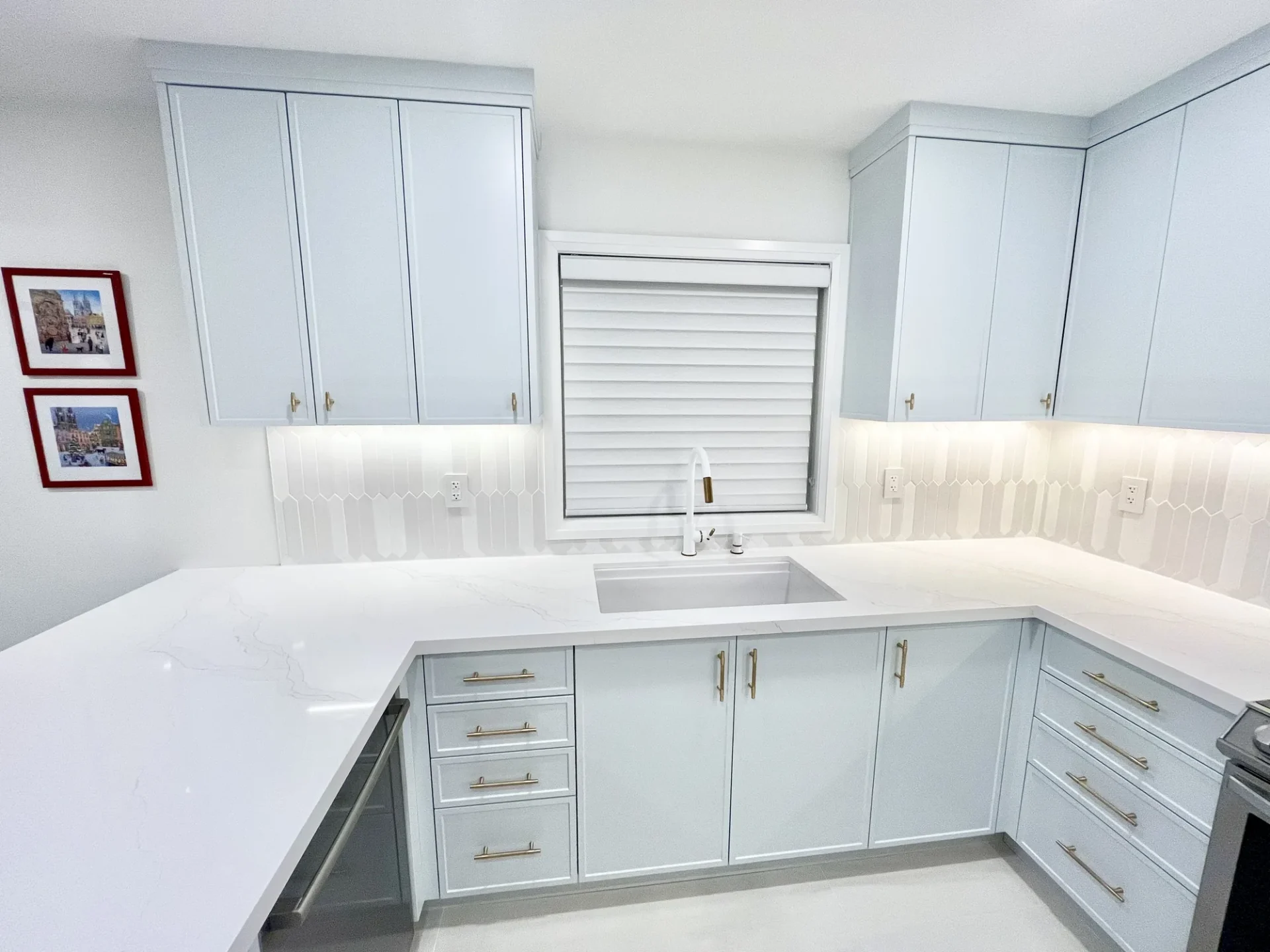
A door style is not only a look. It changes the reveal at the edges, how the run reads next to an appliance, and what happens the first time someone opens a drawer with wet hands.
Most clients choose between handleless and shaker because of the photograph. The difference that matters on site is mechanical and dimensional, not aesthetic.
What handleless actually means
Handleless cabinets rely on a continuous grip channel or a push-to-open mechanism. The door or drawer front sits almost flush with the neighbouring fronts, and the hand finds a recess along the top or side edge. The look is clean and the lines stay horizontal.
The practical consequences are immediate. The grip channel has to be cut accurately and stay aligned across an entire run. Any variation in the floor or the cabinet installation shows up as a step in the channel. Push-to-open mechanisms need clear space behind the door and consistent pressure; they also mean you cannot lean against a door without risking it popping open. In a household with children or guests who are used to handles, the first week is a learning curve.
Cleaning is different too. The channel collects dust and the occasional crumb. A wet hand sliding along the edge leaves marks that are more visible than on a traditional handle.
What shaker actually means
A shaker door has a recessed centre panel and a frame. The handle is a separate piece of hardware screwed to the face. The reveal between doors is deliberate and usually larger than on a handleless run. The overall effect is more articulated and more forgiving of small installation tolerances.
The mechanical advantages are simple. Handles give clear visual and tactile feedback. They work with wet or greasy hands. They can be replaced later without changing the door. The downside is the visual interruption: every handle becomes a point that has to be aligned, and the hardware itself becomes part of the maintenance list (loose screws, worn finishes).
How the choice affects the rest of the kitchen
The door style changes the relationship with appliances. A handleless run next to a fridge with a prominent handle can look incomplete unless the appliance is integrated or the handle is chosen to match the channel language. Shaker doors sit more comfortably beside standard appliance handles because both elements are already articulated.
The same applies to the island. A handleless island with seating needs careful detailing so the grip channel does not become a knee-catcher. Shaker doors with handles require enough clearance so the hardware does not hit the stools or the person sitting opposite.
Edge reveals and filler pieces also change. Handleless systems often use narrower fillers and tighter end panels. Shaker runs usually need a slightly wider reveal to look intentional rather than gappy.
What cannot be changed later
Once the cabinets are ordered, the door style is fixed. Converting a handleless run to shaker (or the reverse) means new doors, new hardware, and often new edge details. It is not a weekend upgrade. The decision has to be made while the shop drawings are still open.
What to ask at the measure
- Do you prefer a continuous grip channel or separate handles?
- Is anyone in the household likely to operate the cabinets with wet or full hands?
- Are the appliances integrated, or will standard handles sit next to the run?
- How important is future flexibility (changing handles without changing doors)?
- Are there children or guests who will need the operation to be obvious on first use?
Our cabinet makers will show you samples of both at their shops when you go to pick your cabinet style and finishes. The difference is clearer when you experience how it feels to open and close them than when you look at a photograph. The style you choose should still work for your family when the kitchen is full of people and the hands are not clean.